ITIS 2026: Artificial Intelligence, Sustainable Innovation, and Digital Ethics in Society 5.0
- November 12, 2026
- Bojana Rauker
- 0
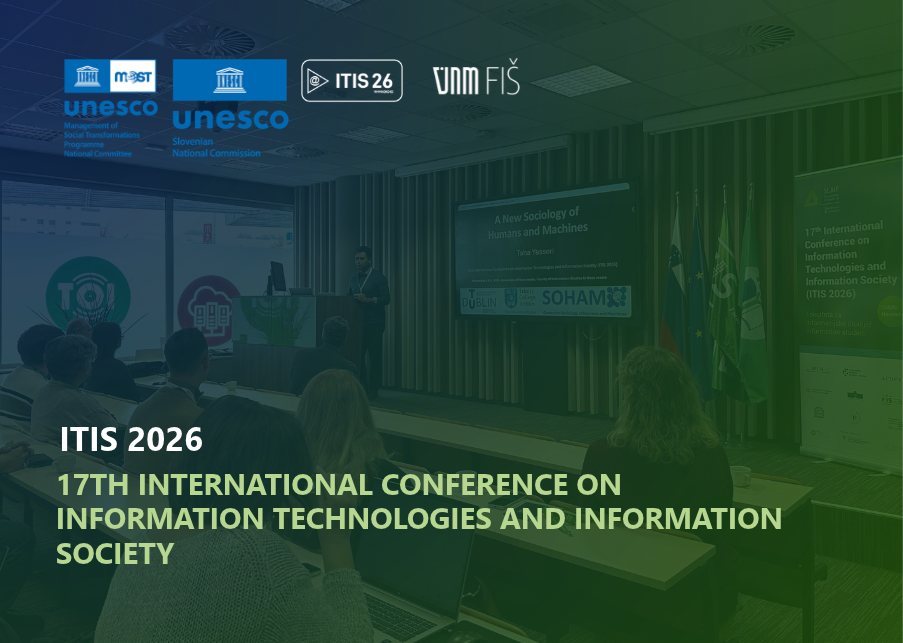
The 17th International Conference on Information Technologies and Information Society (ITIS) took place on 5 and 6 November 2026 at the Faculty of Information Studies ( UNM FIS). Entitled “Shaping Society 5.0 through Interdisciplinary AI, Sustainable Innovation, and Digital Ethics”, the conference once again provided an important platform for bringing together researchers, academics and experts from various fields. As in previous years, it offered an opportunity to exchange knowledge, research findings and ideas on the development of modern digital technologies and their impact on society.
The central theme of this year’s conference was shaping Society 5.0, which places people at the forefront and connects technological progress with sustainable development and the responsible use of artificial intelligence. The diversity of topics addressed highlighted the importance of interdisciplinary collaboration in finding innovative solutions to contemporary social and technological challenges.
This year’s conference featured a rich scientific programme, with researchers presenting their findings, innovative approaches and practical solutions in 36 papers and four keynote or invited lectures. The contributions covered a wide range of topics, from artificial intelligence, machine learning and data science to quantum technologies, automation, digital ethics and sustainable development. Particular attention was also given to the application of advanced technologies in organisations, healthcare, education and industry, as well as their impact on everyday life and working processes.
Four engaging keynote and invited lectures provided diverse research and practical perspectives on the development of modern technologies:
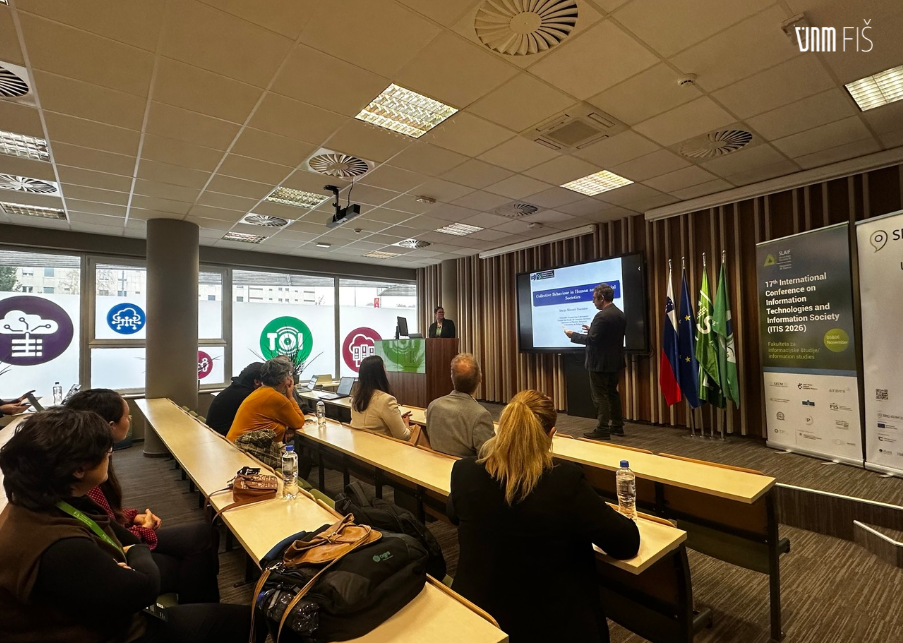
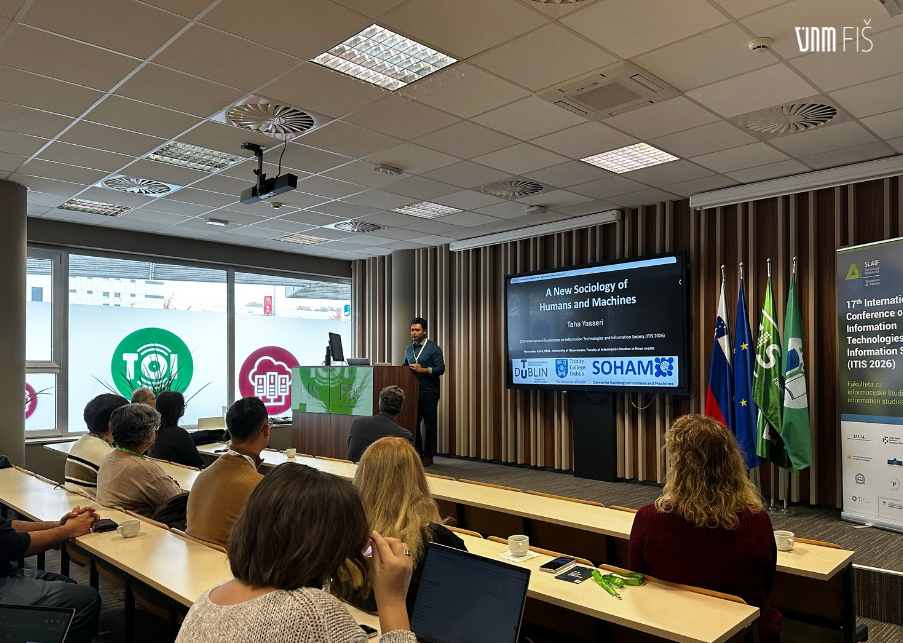
Taha Yasseri – “A New Sociology of Humans and Machines”
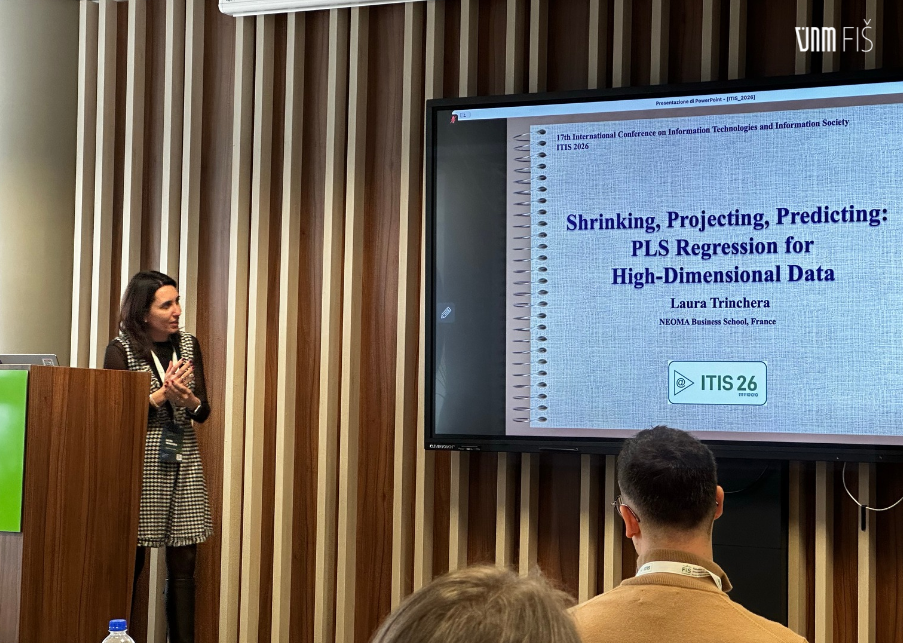
Laura Trinchera – “Shrinking, Projecting, Predicting: PLS Regression for High-Dimensional Data”
Marija Mitrović Dankulov – “Collective Behaviour in Human and Artificial Societies”
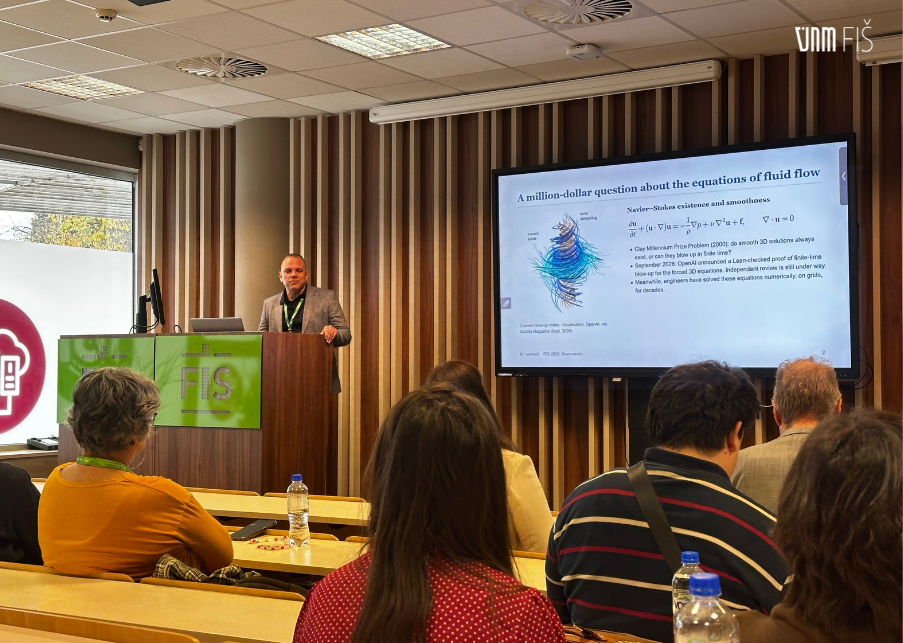
Miloš Ivanović – “Teaching Neural Networks the Laws of Nature: Solving Inverse Problems and Uncertainty in Scientific Computing”
An important part of the conference was also dedicated to research activities within the SLAIF – Slovenian AI Factory project, which promotes the development and application of advanced artificial intelligence technologies and strengthens cooperation between the research community and industry. The thematic sessions featured research on artificial intelligence in organisations, machine learning in medicine, data analytics and intelligent automation.
The programme also included topics related to sustainable development and Industry 4.0 within the Jean Monnet Module, where researchers presented approaches to the circular economy, sustainable innovation and their practical applications. The EDIH 2.0 session focused on opportunities for the digital transformation of businesses, the use of artificial intelligence and the development of sustainable infrastructure solutions.
ITIS 2026 once again demonstrated that information technologies play a vital role in shaping the future of modern society, while their development also raises important questions about responsibility, ethics and sustainability. The conference reaffirmed the importance of connecting science, technology, and diverse areas of society to create an innovative, inclusive, and human-centred digital future.